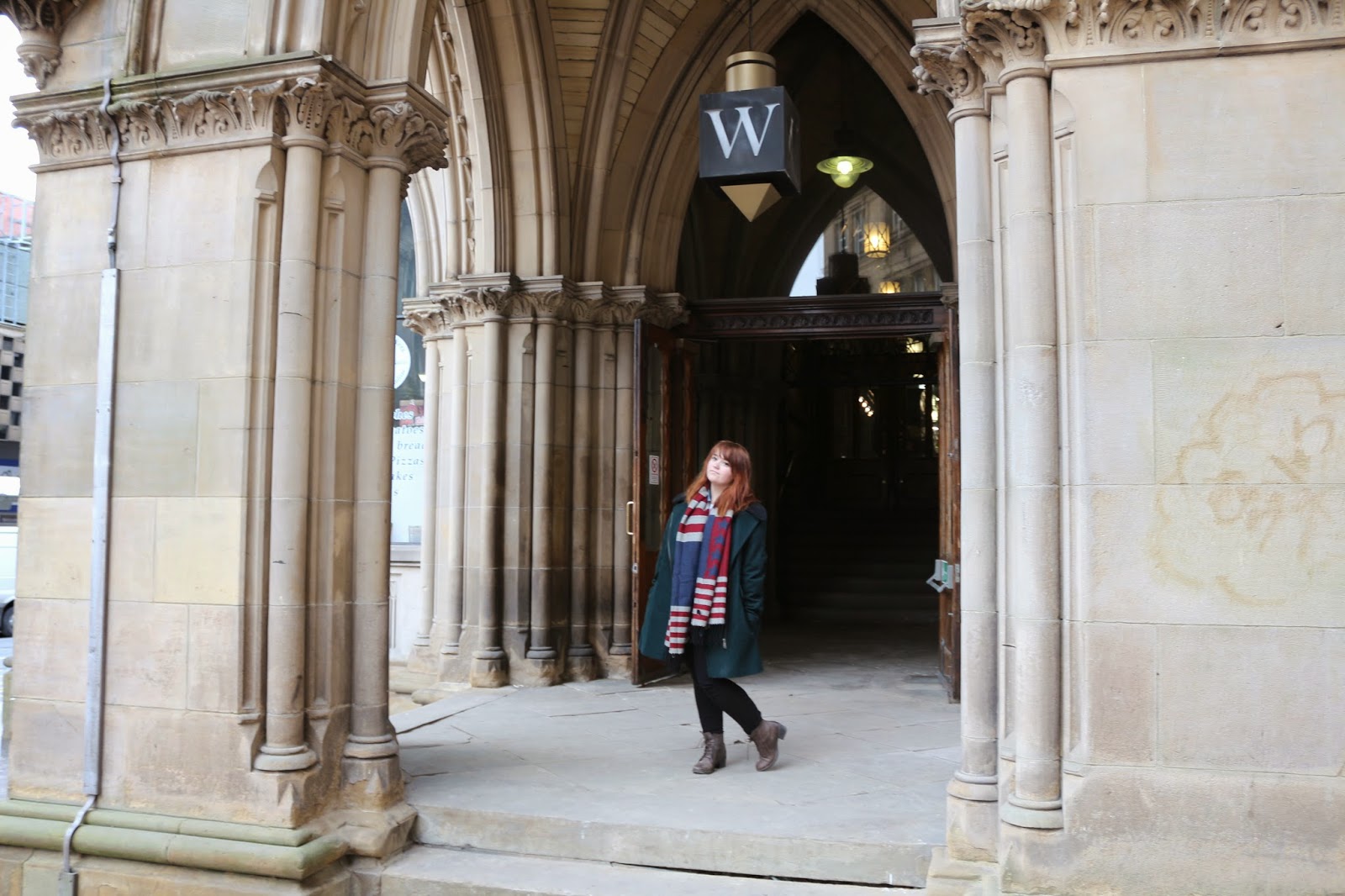
On Tuesday 24th February 2015 I will carry out a photo shoot of old buildings around the Bradford area. For this photo shoot I will be photographing using conventional film cameras and I will be shooting on black and white film to then develop into prints in the dark room. The location in which i will be carrying out this photo shoot will be Bradford city centre and I will be photographing the old buildings in this area. Throughout this photoshoot, i will be aiming to capture the age and beauty which is present and can be found within the architecture found within the city of Bradford.
The buildings which I plan to visit during this photoshoot include:
Bradford cathedral,
St. Georges Hall,
City Hall,
The Wool Exchange,
The Alhambra,
The old Odeon,
The Bradford college old building
and any other old building which can be found in and around the city of Bradford
In order to capture photographs of these buildings I will be using experimental techniques when photographing. The techniques I plan to use when photographing include photographing architecture in reflections, close ups of buildings and head on shots of buildings. using techniques such as these when photographing will give each photograph which i take a unique and interesting look to it and it will eliminate the possibility off all of the photographs i take being the same. I want to eliminate this risk as i am photographing on black and white film and this means that i will not be able to go back and reshoot the photographs which i take if i am not happy with the way they turn out. In order to take some of the photographs in reflections, this means I will either have to use a reflective surface which i can find near a building such as a hand rail or carry a reflective item with me and use this. reflective items which i could use include a small mirror, the back of a spoon or a window of another building near by. In addition to this, depending on the weather on the day in which I take these photographs, if it has been raining and there are puddles on the ground, these could also be used to reflect the building. Furthermore, photographing buildings close up will also add more interest to this photoshoot as it means that any detailing found within the buildings can be captured easily. As i will be photographing the architecture of bradford, this means that i do not necessarily have to photograph the entirety of each building and photographing parts of each building close up will focus on the detail which has been put into the building which would be lost or made less prominent if i was to photograph the building as a whole. This said however, it does not mean that i will not photograph some of the buildings as a whole as there is a lot to see when buildings are photographed in this way.
I also drew out a story board briefly showing my ideas for this photoshoot and roughly how i would like some of these photographs to look. My drawing skills are not the best so this means that the diagrams within this story board do not represent the photographs I am hoping to take very well but I hope they give an idea of the images I wish to take.
Wednesday, 25 February 2015
Tuesday, 10 February 2015
Juxtaposition
For this task i was asked to explore juxtaposition within photography. Juxtaposition is a technique used within photography which combines opposing ideas within one photograph. For example, in the cases i have used within the photographs which i have taken for this task, both new and old buildings have been photographed within the same frame in order to show this contrast. Juxtaposition within photography shows off the contrast between two objects weather this be the contrast between big and small or old and new or simply just two similar yet different subjects within the same frame. Within this task i was asked to go out into Bradford and take some photographs containing juxtaposition. within the photographs which I took, I mainly stuck to taking photographs of the old and new contrast as i felt that this was the easiest to capture within the location i was in. The top left photograph seen within this contact print however shows the contrast between old and new and also the contrast between bright colours of the 'iCreams' sign and the more muted colours of the surrounding buildings. I feel that this worked well as a juxtaposition as it shows two different contrasts happening without being too overwhelming with too much going on. The top right photographs seen within this contact print shows the Subway building. I chose to use this as a juxtaposition as it shows the contrast between old and new quite nicely as the building itself is quite old however the Subway sore is relatively new in comparison. This means that there is a contrast occurring at all times within this building as the old and new contrast is always present. For the photograph seen in the bottom right of this photograph i chose to again capture the old and new contrast, this time by photographing 'The Pavilion' with the ice rink in the background. Again, this works as a juxtaposition as the old and new contrast is present with the pavilion being new in contrast to the ice rink which has been standing in the same place as it is now for many years. Finally, the photograph shown in the bottom left of this contact print was taken within City park and is of one of the egg shaped sculptures with the town hall in the background. This photograph is my favourite out of the four as i feel that this photograph best displays juxtaposition. This photograph again shows the contrast between old and new as the town hall seen towards the background of this photograph is a lot older than the sculpture seen towards the foreground of this photograph. The colours within this photograph are very muted so there is not a lot of interest within this photograph and i feel that it would look better on a nicer day when the sky is blue. I feel that this would look a lot better as a blue sky would add more colour and more interest into the photograph without taking away from the subject of the photograph. I plan to reshoot this photograph in better weather in order to get the results i would like.
Here are the photographs seen in the contact print at their full size so they are easier to view:
A little while after taking the original photographs, the weather picked up meaning that blue skies were present within the same day. This meant that I has the perfect opportunity to go back out and reshoot the photograph of the town hall and the egg shaped sculpture. I chose to only re shoot this photograph within these weather conditions as the original of this photograph was, in my opinion, the best out of the four which I took with the other not being as good so i wanted to see what this photograph in particular would look like had the weather been better. Before taking this photograph i predicted that a blue sky would add more colour and interest to the photograph and looking at the photograph which I reshot I can see that the prediction which i made was right. The reshot image is a lot more interesting than the original as the blue sky makes the images colours more bright and interesting and less muted and dull. In addition to the blue sky adding more colour to the photograph, the sun also brightens up the photograph making it appear a happier scene and altering the mood of the photograph. As the sun was out, this means that shadows of the trees branches were cast onto the sculpture. I feel that this works well within this photograph as it adds a little more detail to the photograph and again adds more interest and more to look at to the photograph. Overall I am very happy with the way this image turned out as it is essentially the same photograph as the original however the blue sky and the sunny day had somehow managed to change the photograph and the message it gives across.
Task 1
For the first task I was asked to take the six elements of design (line, shape, form, lighting and scale) and photograph them in relation to architecture. in order to do this I once again went out into Bradford to photograph buildings but this time my main focus was the design elements which I was asked to photograph. Each photograph shown in the contact print below represents a different design element while still being related to architecture as this is what I was asked to focus all of the images which I was taking for this first task.
This is a contact print of all of the photographs which I took during this shoot. This contact print shows six different photographs showing six different elements of design including scale, form, shape, line, lighting and texture. each of the photographs shown in this contact print is a representation of one of these elements of design. Each of these photographs was taken in and around Bradford city centre meaning that the location for all of these photographs is local and each of these photographs was taken within an outdoor location.
This is the photograph I took in order to represent the design element 'form'. This is a photograph of two of the detailed arched windows features on one side of City hall. I chose to take this photograph to represent form as form is described as 'the 3D version of shape' meaning form to shape is what a cube is to a square. With this in mind, when looking at this building, I noticed the three dimensional archways by the windows on the building and thought that this would fit into he form category for this task. As I was relying on natural lighting when taking this photograph, this means that I got unwanted shadows within this photograph. The unwanted shadows within this photograph mean that the left side of this photograph is quite a bit darker than the right side making the lighting within this photograph uneven. I feel that this photograph would look much better had the light been evenly distributed throughout the entire photograph.
This is a silhouette photograph which I took of city hall in Bradford. This is the photograph which i took for the 'lighting' section of this task. I chose to take this photograph to represent this design element as i felt that the lighting used within this photograph is very different to that used within the other photographs i have taken for this task as this photograph is silhouette and does not have all the detail within the clock tower at city hall on display. In order to take this photograph, I photographed towards city hall while the sun was positioned behind and to the left of the clock tower. As I was aiming the camera directly into the direction of the sun, the brightness of the sun cancelled out the remaining light in the photograph and cast the rest of the scene into shadow. This meant that the scene was silhouetted against the background of the sky. I really like the way this photograph turned out as the way it has been shot means that it is not just another photograph of City Hall and the clock tower, but it is different and unique while still being a photograph of a place which is seen so often by myself. The lighting in this photograph is simple and the source of the lighting in this photograph is the same as in the other photographs which i have taken however the impact which the lighting has had on this photograph is different to the others which i have taken during this photoshoot.
This is a photograph of a section of the David Hockney building at Bradford College.and i chose to take this photograph for the design element of 'line' as this section of the building is created using several boards arranged in parallel lines with strips of lighting incorporated into this. This gives the building a striped look which I thought would work well if used for the design element of line. In order to take this photograph i was hooting upwards so in order to make this apparent i chose to capture the edge of this building along with a small section of the sky towards the right og the photograph. I chose to photograph this in this way rather than getting closer into the lines on this building as I wanted it to remain clear that it was a building which i was photographing and i did not want to obscure the meaning of this photograph by making it so the subject of the photograph was unrecognisable.
This is the photograph Which I took for the design element of scale. This a photograph of the Alhambra with Nicole stood in one of the entrances. When taking this photograph I asked Nicole to stand within the entrance of this building as it would give a sense of scale to this building as we are familiar with the general size of a person so when someone stands by something else, it gives scale to the thing they are stood next to. I took this photograph in such a way that I got the entirety of the building into the photograph with the sky showing at the top of the photograph, i feel that this helps to bring scale to the photograph as you can see just how big the building is as when looking at the photograph, Nicole looks quite small and is not the first thing to be seen when looking at this photograph. overall, I am happy with this photograph as i feel that it shows off the scale of this building well and communicates what i was intending it to communicate.
this is the photograph i took to represent the design element of shape. This is a photograph of a section of the college old building and this section of the building features prominent columns and regular rectangular brickwork. I chose to take this photograph to show off the design element of shape as I liked the way the columns looked when photographed from the bottom upwards but I also thought that the regular pattern of the brickwork was interesting within this building. This as this building has the columns with the intricate stonework at the top of them, this adds more detail and interest to this photograph as if i had wanted to use the regular pattern of brickwork to show off shape, i could have used a veriety of building however, i am happy that i chose to take the photograph of this building as i feel that it is more interesting than some of the others which i could have chosen. i also chose to photograph this building as it features man more design elements such as form, seen in the cylindrical nature of the columns, pattern, seen also within the brickwork, line, seen in the brickwork and the columns and texture seen within the intricate stonework features at the top of the columns. i am happy with this photograph as it not only shows the design element which i was intending it to show, but it also shows many more.
This is the photograph i took for the design element of texture. This is a photograph of a smashed mirrored panel which is part of the old 'mode' nightclub situated next to the Alhambra. I walk past this nightclub most days while i am on my way up to college meaning that I always see the smashed up mirrors on the exterior of the building however I did not think much of it until going out to photograph buildings which contain an element of texture within them. once i was asked to photograph this design element, this building seemed to make sense and fit perfectly as the cracks in the glass are a perfect example of texture as it is apparent from looking at this photograph that there are many sharp edges and it is not something you would want to touch. I like this photograph a lot as the texture is very apparent but also because i think that the pattern caused by the cracks in the glass is very interesting and unique.
Secondary research
Once I had completed my primary research, I then went on to do some secondary research about old and new buildings. this secondary research is displayed as mood boards. I created three mood boards, two to display old buildings and one to display new buildings.
This is the first mood boards which I created and it shows a selection of old buildings located within the bradford area. before creating this mood board i looked into some of the dates that these building were built in order to determine the age of the buildings and to see if the buildings which look to be old actually are the age that they appear to be or if has actually been built at a later date and not to be included within this mood board. Each of the buildings included in this mood board is old and was built at least 100 years ago. The buildings in this mood board include Bradford town hall, St. Georges hall, Bolling Hall, The Wool Exchange, The Alhambra and Salts Mill.Each of these buildings is location is Bradford so all of these locations are fairly local and could later be easily visited in order to later take my own photographs which I will be doing at a later date in within this project. There is a lot of history within each of these buildings making them fit perfectly into this mood board as the mood board focus' around old and historical buildings within bradford. This mood board shows us that there are a lot of old and historical buildings within Bradford.
Bradford town hall: Bradford town hall is a grade 1 listed 19th century building which was built between the years of 1870 and 1973. This building has undergone improvements such as general repairs in 1965 and the repair of the bell which stopped ringing in 1992 as a result of decay to the bell frame. the bells were repaired in 1997. The town hall is easily recognisable for the clock tower which towers over the town hall and overlooking city park. The bells in the clock tower chime every hour, on the hour and at the 2005 memorial of the bradford city fire which happened in 1985, the town hall bells played you'll never walk alone and abide with me as a tribue to those who lost their lives that day.
St. Georges Hall: St. Georges Hall is a grade 2 listed Victorian building located within the centre of Bradford. St. Georges Hall was built in 1853 and is the oldest concert hall still in use in the united kingdom and the third oldest concert hall still in use in the whole of europe. The design of this building was chosen from over 22 designs and was built using ashlar sandstone. the interior underwent remodelling after world war 2 and again after fires in the 1980s
The wool exchange: The wool exchange building is a grade 1 listed building originally built as a wool trading centre in the 19th century. This building was built between 1864 and 1867 and was built in a gothic architectural style. The building has not been used as a wool exchange since the 1960's and is not used as a cafe and Waterstones book shop.
The Alhambra: the Alhambra is a theatre built in 1913 for a cost of £20,000. in 1964 the Alhambra was bought by bradford council and in 1974 it was designated a grade 2 listed building. The Alhambra is easily recognisable on the bradford skyline because of its large domes roof making it compliment the domes present on the building of the odeon which is situated right next to it.
This is the second mood board which I created and this mood board consists of old building in the west yorkshire area. When collecting images for the mood previous mood board i found that there were a lot of interesting, old and historical buildings in Bradford and the surrounding areas so i decided to create a mood board to show the old buildings in Bardford and a separate one to show the old historical buildings in the rest of west yorkshire. This mood board includes photographs again of buildings which are at least 100 years old and the buildings which have been included are Leeds town hall, Kirkstall Abbey, Fountains abbey and the 'Majestic' hotel in Harrogate. Like within the last mood board, each of these buildings has a lot of history and i found that they were interesting and aesthetically pleasing making this the reason I included them into this mood board.
This is the third mood board which i created and this mood board contains new buildings which are located within west yorkshire, When creating this mood board, i was originally going to create a mood board just for new buildings in bradford and another for new buildings in the rest of west yorkshire however i was not able to find enough photographs of this nature in order to create a mood board of each so i combined the two and created a mood board containing photographs of new buildings from areound bradford and the rest of west yorkshire. the buildings included in this mood board are all new and this can be seen by the design of these buildings. the design of the buildings within this mood board all differ greatly however there is a reoccurring theme of a large amount of glass being used within the construction of these buildings. This is a give away that these buildings are new in comparison to those included within the other two mood boards as when the other buildings were designed and constructed, the use of large amounts of glass was not as popular as it is now and the main construction material was brick and stone. These materials are still used within the construction of buildings today however a lot more modern looking materials such as glass and steel are used in the construction of buildings today. some of the buildings included in this mood board include The David Hockney building at Bradford College, Titus Salt School, westfiels bradford and trinity leeds.
David Hockney Building: The david hockney building is the most recent addition to Bradford college and it was opened in 2014 after 2 years of construction. This building was named after the photographer David Hockney who is a former student at this college and is now an extremely successful and well known photographer. This building has a modern design with a large glass exterior making it clear by looking at it that it is a modern building.
Westfield bradford: Westfield is a new shopping centre which i due to open this year. it is still currently under construction meaning that this is clearly a new building as it is still yet to be completed.
Titus Salt School: formally known as Salt Grammar School was completely rebuilt in 2008. The original building which was built in 1945 was proved to be not fit for purpose anymore so it was rebuilt on the same site in 2008. This building has a typically modern design with the use of curved walls and a lot of glass. these features are give aways that the building has a modern nature when looking at it without the need to do much research in order to know this information.
Monday, 9 February 2015
Primary research
As primary research into old meets new architecture, I was asked to go out around Bradford with 3 of my classmates and photograph examples of architecture which fit into four different areas. The four areas I was asked to photograph within this task were a building built before 1913, a building built after 2010, a reflection of all members of the group taken in a building and a photograph of one of the members of the group stood in front of their favourite building in Bradford. For this research I was asked to capture four photographs, one for each of these areas, however I decided to take a few more than this as I felt this would give me a selection of photographs to later choose from.
Here are the photographs I took when carrying out my primary research:
Once I had taken these photographs, I then decided on the best four photographs, the four photographs which I felt best showed off the four areas I was aiming to capture. Here is the contact print which contains the four photographs which I chose:
This contact print contains four photographs, one for each of the areas i was asked to photograph when carrying out my primary research about old meets new architecture. I feel that I have captured the essence of each of the areas I was asked to cover within these four photographs as the top left photograph, of St. George's Hall is a building which was built before 1913, the top right photograph is a photograph of Natalie stood outside of her favourite building, the bottom left photograph is a photograph of the new Westfield shopping centre which is currently being built meaning this is a building which is built after 2010 and finally the bottom right photograph is a photograph which was taken in a shop window and is a reflection of the entire group.
This is a photograph of St. George's Hall in Bradford which is a concert hall built in 1853. As this building was built at this time it means that it fits nicely into the "buildings built before 1913" portion of this research. I chose to take this photograph to fit in with this section of the research as it was built within the correct time and also because I find this building appealing to look at. I chose to photograph this building at a slightly different angle to what might usually be photographed as I chose not to stand directly in front of the building and instead to stand slightly off to one side and as I was stood close to this building and looking up at it when taking this photograph, it means that the photograph was taken from a low angle. I think that the angle at which I chose to take this photograph works well as because this photograph has been taken from a low angle it makes the building look as though it is towering above you and the low angle which the photograph was taken from makes the building look as though it has more importance. In addition to this, by not taking this photograph head on, I feel that this adds a bit more interest to the photograph as not all of the building can be seen within the photograph as some parts are hidden by others and this leaves a little up to the imagination to fill in the gaps on what the hidden part of the building look like. I think that this photograph works well as although there is not much colour within the photograph as the building is predominantly a sandy beige colour, the parallel lines where the brickwork on the bottom half of the building adds a lot of interest to the building and this is one of the most noticeable features within this photograph. That said, the brickwork which has been used within this building is quite blocky and does not include a lot of texture, this means that there is a contrast with the intricately detailed stonework which is features within this building which can be seen towards the top left hand corner of this photograph. The lighting within this photograph is solely reliant on natural lighting as I as photographing in an outdoor location during daylight hours with no additional lighting support. The day on which I took this photograph was overcast and cloudy and for this photograph, I feel that this worked well as enough light was present but it was not too bright as to cause harsh unwanted shadows within the photograph. In addition to this, the colours which are present within the building itself are quite muted and as the sky at the time was also a muted colour and not bright like it had the potential to be on some days it fits nicely with the colour scheme of the building and the colours within the photograph compliment each other well. In addition to this, I used a landscape format in order to capture this photograph as I felt this was the best format in order to include each part of the building which I wished to photograph. If I had been to take this photograph using a portrait format i think some of the features captured within this photograph would have been lost such as the row of the pillars fading into the distance slightly seen towards the top of the photograph.
This is a photograph of Natalie stood outside of the book shop Waterstones. This is the photograph which I took for the section of the research in which I photographed a member of my group stood outside their favourite building. Natalie told us that her favourite building in Bradford was Waterstones as it is related to her love of books and the building itself is appealing to look at. The building used for this Waterstones is the building which was once used as the wool exchange in Bradford and was built in 1864 and the intricate stonework which was popular within the construction of buildings at this time is present here making this building particularly attractive and I can understand why Natalie chose this building as her favourite in the area. If I could, I would change the angle at which I took this photograph at as looking back at it, it is clear that the photograph is slightly uneven and unsymmetrical. Had I have stood slightly more to the left so I was viewing the building and Natalie more head on, I feel that this photograph would look slightly nicer as the framing would be better and this would make the photograph look more symmetrical. In addition to this, the format in which I chose to take this photograph was landscape however I feel that this format is slightly limiting and a portrait format may fit this photograph better as it would allow me to get the entirety of the archway into the photograph and this would give a better sense of perspective to this photograph which would also help to frame this photograph more.
This is the photograph I took of the new Westfield shopping centre being build in Bradford town centre. I chose to take this photograph in order to show of the section of this research in which i photographed a new building which was built from 2010 onwards. I chose to take a photograph of this building as it is currently still under construction therefore I know for a fact that it was built after 2010 and fits into the section of the research which called for a photograph of this nature. This photograph clearly shows that this building is currently under construction, I chose to photograph the building purposely to show this as this means that even if someone looking at this photograph not knowing the age of the building, they can see from looking at this photograph that as it is still under construction that it is obviously newer than 2010 so it is obvious which section of the research this photograph fits into. This said, I do feel that this photograph could be improved had had the weather been better and the sky had been blue rather than a cloudy sheet of white in the sky. The blanket of white cloud above the building makes this photograph look quite dull and I feel that had the sky been blue, this would have added more interest to this photograph and the blue of the sky would have complimented the shaded of blue and purple currently seen within this photograph. In addition to this, I feel that the lamp post seen towards the left of this photograph is slightly distracting and i feel that this photograph would benefit greatly had this lamp post not been in the way.
This is a photograph of myself, Natalie, Rebecca and Nicole taken from the reflection found within a window of a building. I took this photograph in order to complete the section of this research whcih called for a photograph of my group taken in the reflection of a building. This photograph was taken in a window of a building opposite Santander bank near Kirkgate and i felt that this window would be great for taking the reflection of the group in as behind the window were black blinds. The black blinds behind the glass of the window caused a dark background of the window and this then acted as a mirror making it easy to get a good reflection to take a photograph of. When attempting to take this photograph I found that windows which had lighter backdrops did not work as well as reflective surfaces as those with darker backdrops like this one did. I feel that this photograph would work a lot better had the window been cleaner at the time of taking this photograph as the dirty streaks on the window are very obvious within this photograph. I found that this was a common problem when trying to take this photograph as each of the windows which I saw as reflective enough to take this picture were all quite dirty and had a lot of marks on them and at the time of taking these photographs it was not possible for me to get the window clean in order for me to be able to take a better photograph for this section of the research which I carried out
Tuesday, 27 January 2015
Final Evaluation
Throughout this project I aimed to capture the essence of
location within photography. The way in which I captured and displayed location
within photography. In order to do this I completed a series of tasks which
allowed me to explore location photography and how location has a large impact
upon a photograph and how it is taken. The tasks which I completed within this
project helped me gain a better understanding of location photography and how
the location a photograph is taken in makes a big impact on the photograph
itself. During the first task which I completed I was asked to visit a number
of locations, both indoor and outdoor, that fit into certain genres such as historical,
fashion and travel. I found that some elements of this task were much easier
than others as finding things to photograph within the travel genre in an
outdoor location proved to be easy as there are a lot of cars, buses and other
modes of transport on the roads however I found this genre much more difficult to
complete within the indoor location as it is not common to fins things such as
cars in an indoor location. This task taught me that different locations are
more suited to some genres more than others and that some genres within
photography are more suited to indoor locations than outdoor locations and vice
versa. The second part of this task
required me to choose an inanimate object and take this to the locations which I
visited during the first part of this task. The aim of this task was to make
the location the main priority within the photograph. However, this did not necessarily
mean that the location would always be the main focus of the photograph, it
just meant that the location of the photograph would be the only thing to
change from one photograph to the next as the main subject would always be the
inanimate object which I chose to photograph. This part of the task taught me
the importance of location within photography and how not every location will
be suitable for each photograph which you choose take as the object which is
the subject of the photograph will not always fit in within the location you
have chosen to photograph in. This part of the task has highlighted how
important it is to choose the right location when planning a photoshoot. The
second task which I completed during this project was all about the composition
of photographs. During this task I looked at compositional techniques such as
rule of thirds and different angles such as high, low and birds eye angles. While
completing this task I learned that the composition of a photograph is very
important as this determines where the eye is directed to when looking at a
photograph. The composition of a photograph determines which part of the
photograph is seen first and which parts go unnoticed until later. Once I had
explored the composition of photography and researched location within
photograph, I was then asked to start the panning for my final show reel. I
completed my planning in two parts, I first wrote out a written plan,
explaining ideas which I had, then I later expanded on this by creating a story
board of my ideas. Within this story board I roughly sketched out how I wanted
each of the photographs I was planning to take to look and underneath each
small sketch I wrote a little about the location of each photograph, the lighting
I was planning on using and what was included within the photograph if the
sketch was not too clear. I felt the need to put a small explanation of what
the photograph would be of underneath the sketch as I feel that I lack a bit of
artistic ability and find it difficult to draw pictures clearly. Once I had completed
this, I filled out a risk assessment sheet then completed the photoshoot which I
had planned. After this I was asked to research royalty free music and in doing
this I found that royalty free music is music without copyright meaning it is
legal to use in any sort of publication without any repercussions. After I had
completed a bit of research on this matter I then found a piece of royalty free
music which I likes and processed to put together my showreel. To create my
showreel I used photoshop to combine all of the images I had taken along with the
track or royalty free music which I had also found to fit with the theme of my
showreel. Putting this showreel together was a new experience for me as before
this project, I had never used photoshop in such a way so each step that I took
to complete this showreel was new and something which I had to learn. Once I had
got the hang of creating the showreel, I found it relatively easy to do as I only
found it a bit tricky in the beginning as it was a new skill which I had to
learn. Within this project I feel that I have improved my time management
skills from the last project as I have not found it too stressful to manage to
meet deadline this time. If I could redo this project, one thing I would change
would be that I would have spent more time looking for better locations to take
photographs in during the first couple of tasks which I completed as I feel
that they are a little dull as they are just locations in and around the centre
of Bradford. If I was to re do this project I would try to branch out a little
so I could photograph some new locations which I have not photographed before. This
would add extra interest to the photoshoots which I created and add more
interest to m project in general. Overall I feel that this project was
successful as I completed each of the tasks provided to the best o0f my ability
and thoroughly enjoyed learning about the importance and significance of
location photography.
Monday, 26 January 2015
Task 4a - Royalty Free Music
Royalty free music is music which is mainly downloaded from
the internet for use within videos and projects of all shapes and sizes. The
term royalty free refers to a type of licensing agreement which allows the
person who buys a piece of music to use said piece of music as much as they
like and for as many different projects as they like while only making one
fixed payment if this is required. Music which does have royalties attached to it comes at a fee each time the
piece of music is used for an advertisement or whatever the piece has been
intended for, this means that each time the music is played, the cost of the
royalties is sent to the creator. However, royalty free music has a one time
payment when you first purchase the track and no additional costs for each time
the music is used meaning the person who wishes to buy the track does not have
to pay additional fees each time they wish to use the piece of music. A lot of
people believe that royalty free music is free, however, this is not necessarily
the case. Some of the creators of the royalty free music may make their work
available for download for free as they just want to get their music out there
and known however some other creators charge a small fee for downloading the
track initially simply because it is a product they have created and do not
want to give it away for nothing if they have put a lot of hard work and effort
into it. A lot of the time though, the price of the of the track is not too
pricey and they are often affordable for a lot of people. This is because royalty free means free of
royalty, not free of cost meaning the creator of the track is entitled to
charge as much or as little as they wish for the music which they create. There
are various websites which are great for finding royalty free music in order to
use in projects such as this, a couple of websites which I found particularly
useful were Bensound.com and purple-planet.com. Both of these websites are free
to download music from and offer a wide range of royalty free music. Below I
have shown some of the tracks which I liked, these tracks are nice calm and
gentle tracks which I thought would be perfect to tie into my theme of a cup of
tea as this is quite a gentle subject.
Subscribe to:
Posts (Atom)